Hot water or cold water: which pressure washer you need
If what you clean is greasy or oily, you need heat; if it's loose dirt and mud, cold water with good flow costs less to buy and run.
Updated October 23, 2026
Start with what's on the surface. If it's oily or greasy (diesel film, cooking grease, hydraulic fluid, road tar, animal fat), you want hot water. If it's loose dirt, mud, dust or pollen on a surface that doesn't hold grease, cold water does the job for less money and less upkeep.
Heat matters because grease softens as it warms. Cold water hits a greasy chassis and moves the grease around. Hot water melts it, so the detergent can lift it and the rinse can carry it off, and most detergents work faster warm. On greasy work that means less chemical and fewer passes, which is how a hot-water machine pays for its higher price.
Cold water has real advantages. The machine is lighter and simpler, there's no burner to fuel or service, and it has no water heater of its own, so it won't scald a surface that heat can damage. For mud on equipment, cold water with good flow is often enough, and American Water Works sells Hotsy cold-water machines for that work.
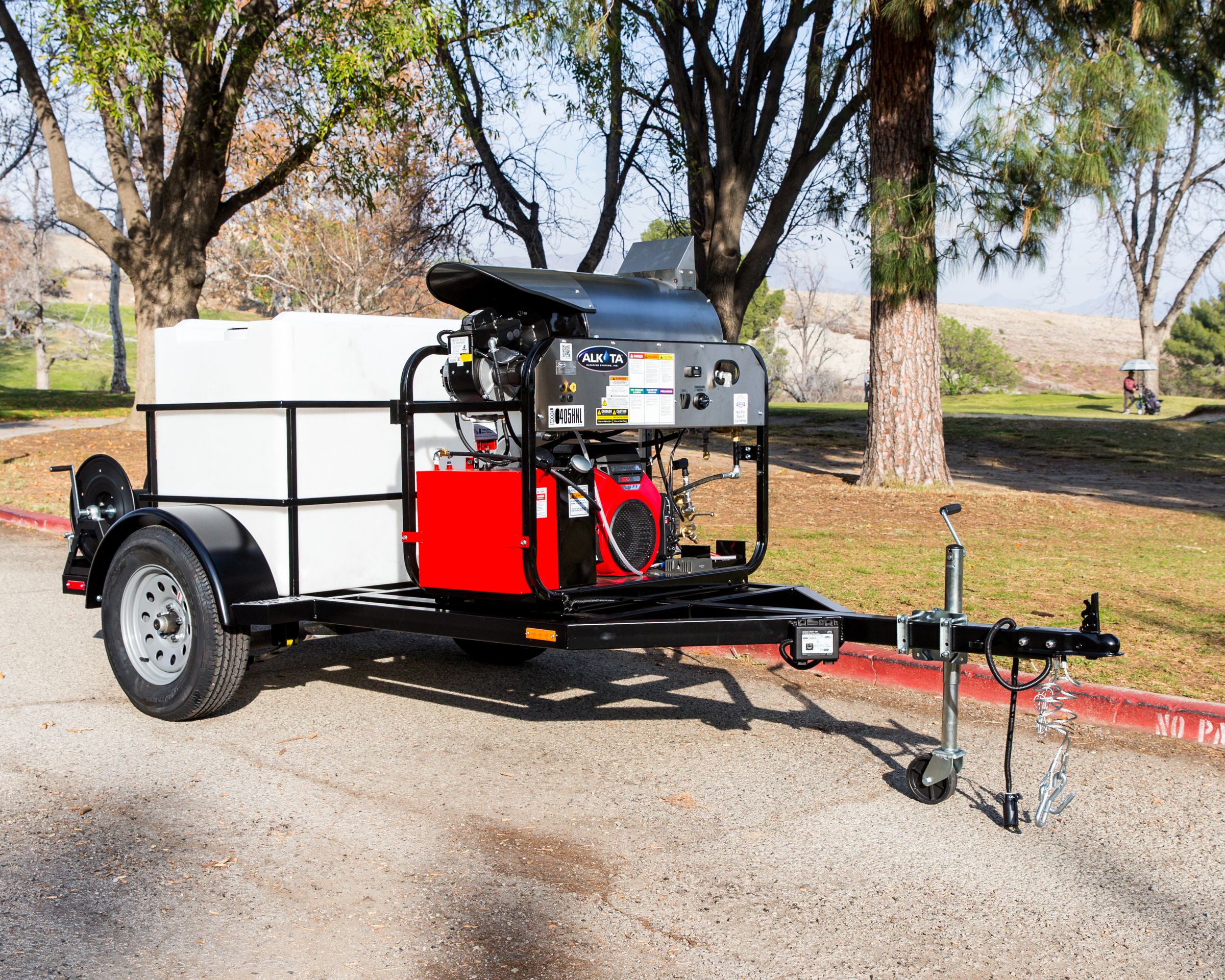
How hot a machine gets depends on its burner and on how much water it is heating. Heating one gallon a minute by one degree takes about 500 BTU an hour, so the more GPM a machine pushes, the bigger the burner it needs to reach the same temperature. Two machines on the Universal Trailer rigs show the trade. The All American PH5035HBOF moves 5 GPM with a 315,000 BTU burner and is listed at a 115°F rise over incoming water. The Alkota 8405HNL moves 8 GPM with a 550,000 BTU burner and is listed at a 90°F rise. With 60°F water from the tap, that's about 175°F from the PH5035HBOF and about 150°F from the 8405HNL.
Neither is wrong. The 8405HNL puts down 60% more water at a lower temperature, which suits big surfaces with moderate grease. The PH5035HBOF runs hotter at less flow, which suits heavy grease in smaller areas. The Alkota 5357C, the Kubota diesel build, lists a maximum outlet temperature of 210°F.
Heat has a running cost. Burner fuel use is listed at 2.25 gallons an hour for the PH5035HBOF and 4 gallons an hour for the 8405HNL, which is 18 and 32 gallons across eight hours at those rates. Burners cycle off as the water comes up to temperature, so real use is lower, but budget for it.
The heat source is a choice too. Most portable and trailer machines use an oil-fired burner on diesel or kerosene. Stationary machines in a wash bay can burn natural gas or LP instead; per the manufacturers' brochures, the Hotsy 900 and 1400 series and the Alkota gas-fired series are built that way. Where a flame isn't welcome, all-electric machines heat the water with elements: the Hotsy HWE series (460V three-phase) and the Alkota All Electric series (240V or 480V three-phase), per the same brochures. They make no exhaust, which matters indoors and in food plants, but they need three-phase power at the wall, and their flow tops out lower, about 2 to 4 GPM in those brochures.
Steam is a separate tool. A true steamer (the shop sells Optima steamers) uses very little water and suits interiors, engines and places where runoff is the problem. It won't wash a fleet.
A quick way to decide:
- Grease, oil, diesel soot, food fats: hot water.
- Mud, dust and loose dirt: cold water, unless the same machine also has to handle grease.
- Gum on concrete: hot water.
- Indoors, where exhaust isn't allowed: all-electric hot water.
- Mixed work from one machine: hot water, since a hot-water machine can always run with the burner off.
If you're not sure which side of the line your work falls on, describe it. The first call is about the job, and the machine follows from it. Use the form below.