Design preview, not the live site. Forms here go to a test list, not the shop.
American Water Works

Home / What are you cleaning / Fleet trucks

Road film and diesel soot on a yard full of trucks that still look dirty after the wash

What you see

The trucks come off the wash with a gray film still on the doors and a brown line along the bottom. Run a finger down the side and it comes back black.

Why it happens

Road film is oil and diesel soot stuck to the paint, and cold water mostly moves it around. A machine short on flow, or a burner that can't hold temperature once the trigger is open, turns every truck into a long, slow wash. The wrong soap, or none at all, leaves the film where it was.

What it does to you

Every extra minute per truck is paid labor, every week, across the whole fleet. A truck that leaves dirty carries your name down the freeway, and a crew that hates the wash starts skipping it.

On the call the shop asks how many units you wash and how often, and where: your own bay or wherever the trucks park. It asks what power and fuel you have at that spot, who runs the wand, and what the wash costs you now in hours, because that number decides how much machine makes sense.

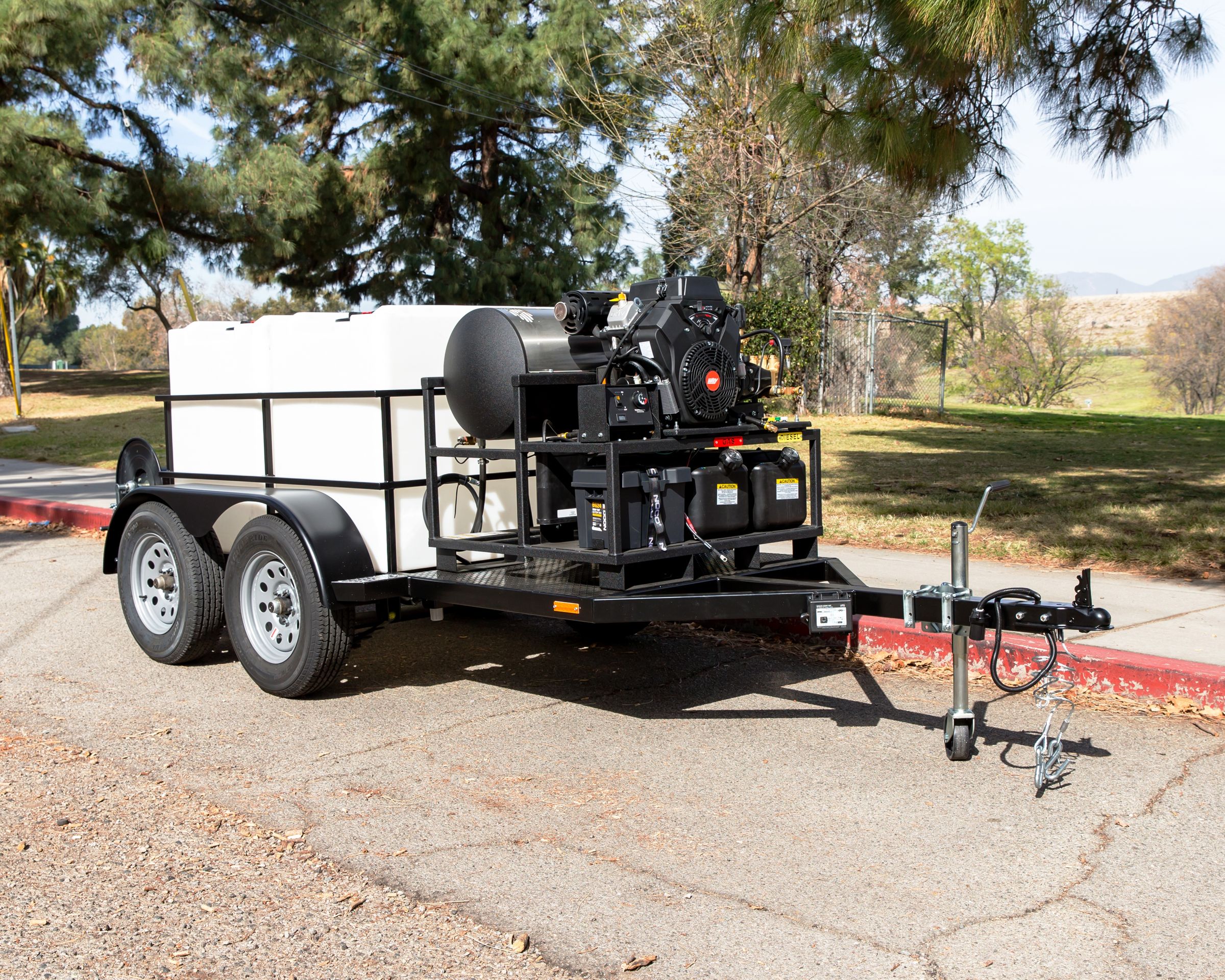
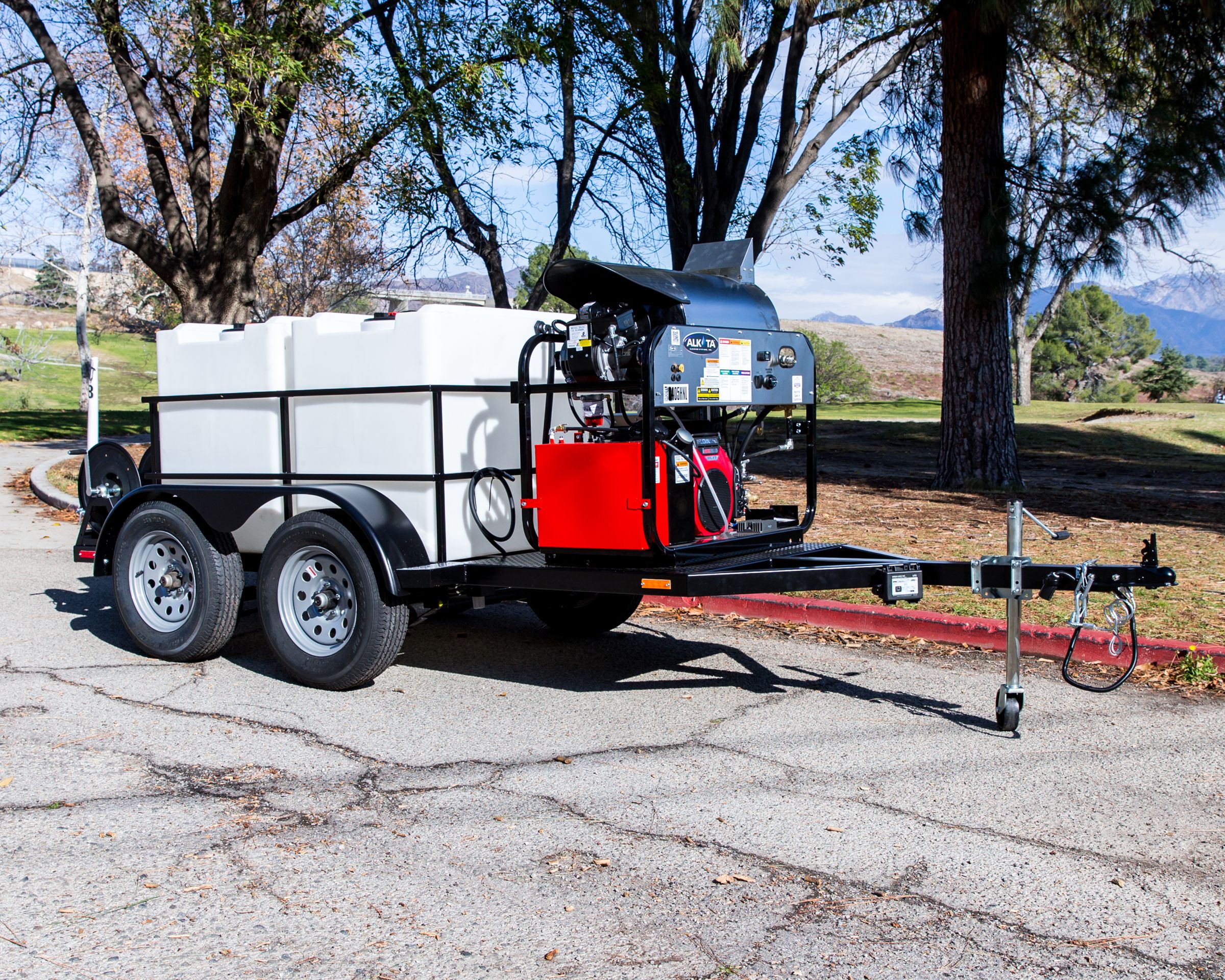
If the trucks come to you and you have a bay, a stationary unit usually fits. The Hotsy 5700/5800 is built for wash-bay installs: 8.0 GPM at 3000 PSI or 9.5 GPM at 2500 PSI on a 20 HP electric motor, per the manufacturer's 2016 brochure. If you wash where the trucks park, the Hotsy HSS is a self-contained skid on a Kubota diesel, 5.0 to 9.5 GPM, plumbed for a remote water tank. On a trailer, the AWW-HDS8 on the UTT460 brings 8 GPM and its own 460 gallons on tandem axles with electric brakes.

Soap matters as much as heat. Transport Vehicle Wash is the vehicle detergent, and Aluminum Brightener is for aluminum. Salt Lick is made for salt and de-icer, for trucks that run winter roads.

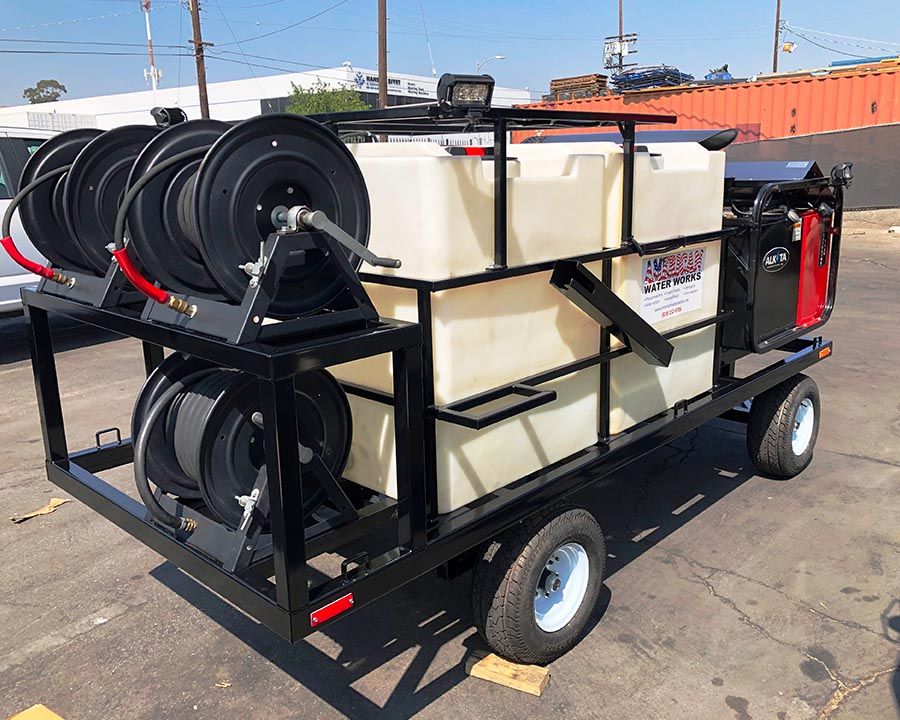
Black-frame trailer rig with four hose reels, a full-length white tank and the American Water Works decal

What the shop would start with

Hotsy HSS / HSDS Series

Maker
Hotsy
PSI
2,500 to 3,500
GPM
5.0 to 9.5
Heat
diesel
Power
Kubota Z602 or D1105 diesel engine (16 or 24 HP, Tier IV), electric start
Warranty
Pump 7 years; heater coil 5 years, non pro-rated (per the 2016 brochure)
Quoted on the call

Hotsy 5700 / 5800 Series

Maker
Hotsy
PSI
2,500 to 3,000
GPM
8.0 to 9.5
Heat
oil or natural gas (LP optional)
Power
208/230/460/575V 3-phase electric, 20 HP (16 to 55 A)
Warranty
Pump 7 years limited; heater coil 5 years (per the 2016 brochure)
Quoted on the call

Hotsy 1200 Series

Maker
Hotsy
PSI
3,000 to 4,000
GPM
4.5 to 5.6
Heat
oil
Power
Briggs Vanguard 16/21 or Honda GX630 gasoline engine
Warranty
Pump 7 years limited; heater coil 5 years (per the 2016 brochure)
Quoted on the call
AWW-HDS8 on the UTT460 tandem axle, photographed by Universal Trailer

AWW-HDS8 · UTT460

GPM / PSI
8 GPM
Engine
25 HP Kärcher V-twin, gas and diesel tanks
Tank
460 gal, Tandem 3,500 lb drop axles
From $18,088Published price, Oct 23, 2026
Build this rig

From the build gallery

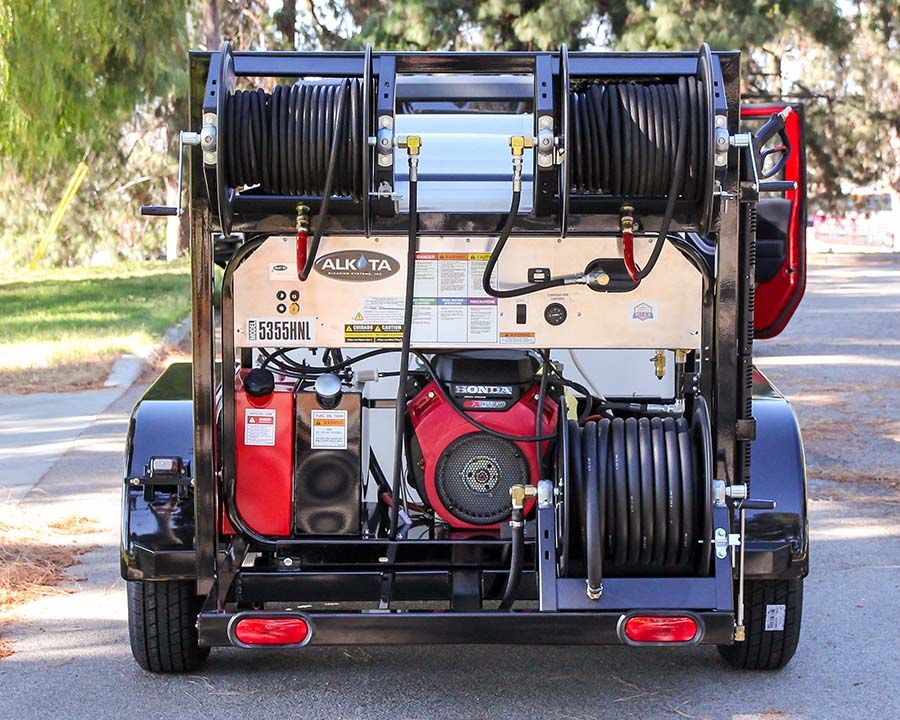
In the gallery: an Alkota 5355HNL hot water machine, a Honda engine and three hose reels on the back of a trailer.

Rear view of a black trailer rig with an Alkota 5355HNL hot-water machine on a Honda engine and three hose reels

Tell us what's going wrong

Road film and diesel soot on a yard full of trucks that still look dirty after the wash

A dead burner, a citation, a bid due Friday. Your words.
How do we reach you? A phone or an email is enough.
A few more questions (optional)
Downtime, labor, a lost bid. A rough idea is fine.
Brand, model, age if you know it.

Here's what happens next: The Pacoima counter calls you within one business hour. The call is 15 minutes. We ask what's going wrong, how you plan to pay, and who else weighs in. At the end we set a next step, or tell you straight that we're not the right shop. Nobody pitches anything until we understand the job.

Rather just talk? Leave a number.
A dead burner, a citation, a bid due Friday. Your words.
How do we reach you? A phone or an email is enough.

Here's what happens next: The Pacoima counter calls you within one business hour. The call is 15 minutes. We ask what's going wrong, how you plan to pay, and who else weighs in. At the end we set a next step, or tell you straight that we're not the right shop. Nobody pitches anything until we understand the job.