Design preview, not the live site. Forms here go to a test list, not the shop.
American Water Works

Home / What are you cleaning / Streets and parks

Graffiti back by Monday and a crew working with the wrong rig

What you see

Graffiti gets painted over in a color that doesn't quite match, and the patchwork becomes its own eyesore. Sidewalks and park restrooms get washed on schedule, but the gum and the stains stay.

Why it happens

Paint on brick and block needs a remover and heat, not just pressure that etches the surface. Working on a public street also means bringing your own water. Many cities restrict wash water reaching the storm drain, so ask yours what it requires. In California, the rig's engine is a question of its own before it goes on the road.

What it does to you

Crew hours go to repeat visits on the same walls. A rig that doesn't meet the spec in a bid loses the bid.

The shop asks what your crews clean (graffiti, sidewalks, restrooms, the city's own vehicles) and how many crews you run. It asks what the bid or fleet spec says about engines and emissions, what you're required to do with the wash water, and whether the work rides on a truck or a trailer.

For graffiti, the Roadline graffiti-removal truck, model GPMT-H/W, is its own line on the rigs page and is quoted on the call. For washing, the Alkota 5357C on a Kubota diesel is the build on the published grid listed as California-compliant: 4.7 GPM at 3500 PSI, water up to 210 degrees, from $21,800 on the UTT460 with 460 gallons. For a city truck you already own, the Hotsy HSS is a self-contained diesel skid, 5.0 to 9.5 GPM, per the manufacturer's 2016 brochure. Where the water has to be caught, the UTT 460 reclaim trailer has a 460-gallon tank and vacuum recovery with automatic pump-out.

Fat Cap Brick is Hotsy's liquid graffiti remover. Breakthrough handles general washing, and Transport Vehicle Wash is for the fleet.

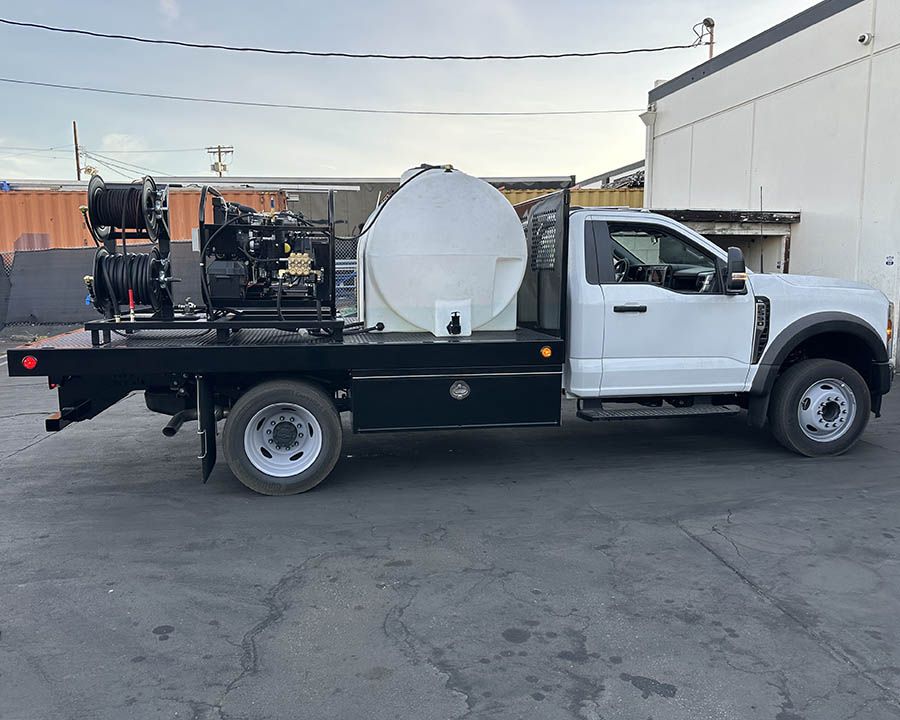
White flatbed truck carrying a hot-water skid, two hose reels and a large round tank

What the shop would start with

Hotsy HSS / HSDS Series

Maker
Hotsy
PSI
2,500 to 3,500
GPM
5.0 to 9.5
Heat
diesel
Power
Kubota Z602 or D1105 diesel engine (16 or 24 HP, Tier IV), electric start
Warranty
Pump 7 years; heater coil 5 years, non pro-rated (per the 2016 brochure)
Quoted on the call

Hotsy 1200 Series

Maker
Hotsy
PSI
3,000 to 4,000
GPM
4.5 to 5.6
Heat
oil
Power
Briggs Vanguard 16/21 or Honda GX630 gasoline engine
Warranty
Pump 7 years limited; heater coil 5 years (per the 2016 brochure)
Quoted on the call
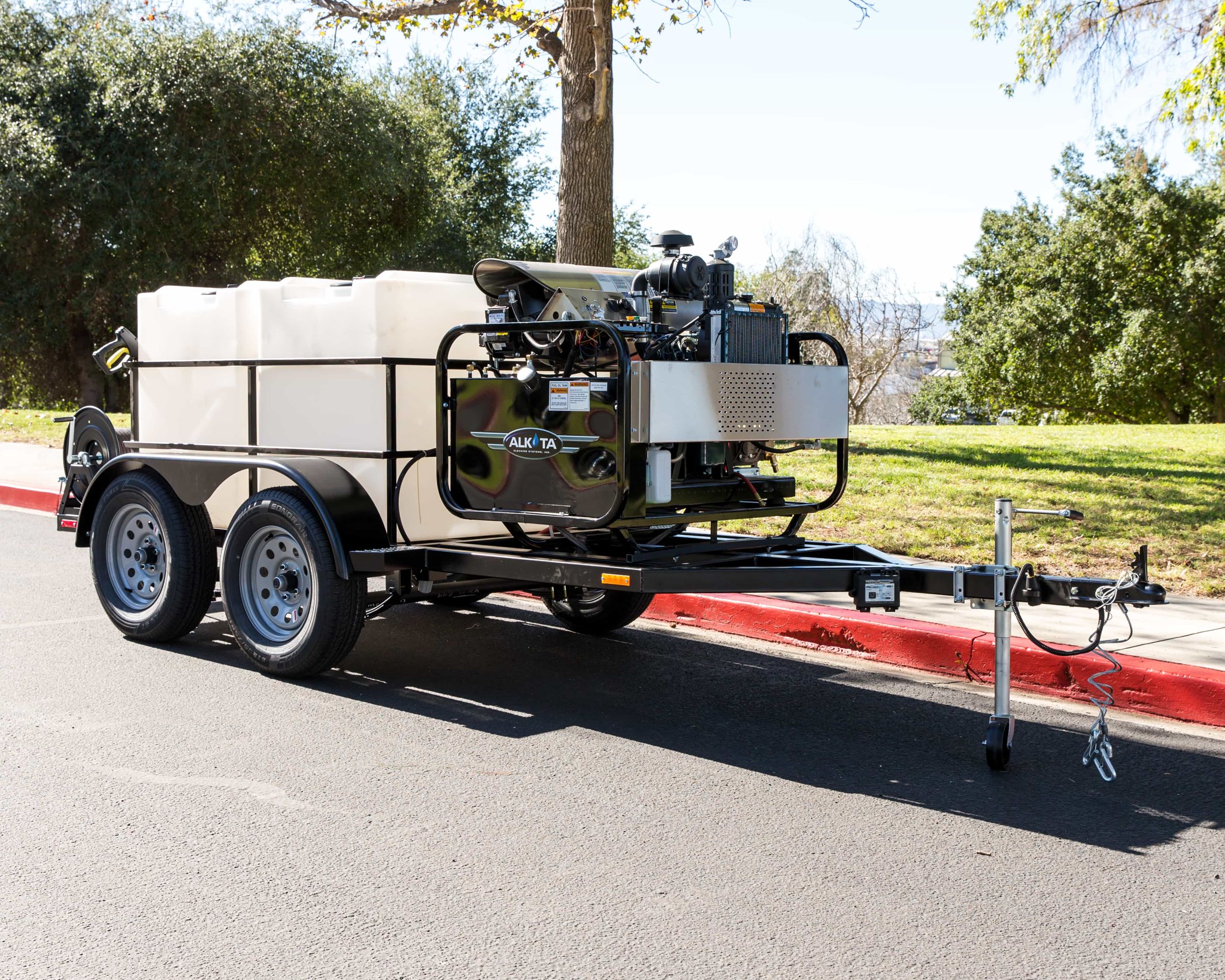
Alkota 5357C on the UTT460 tandem axle, photographed by Universal Trailer

Alkota 5357C · UTT460

GPM / PSI
4.7 GPM @ 3,500 PSI
Engine
Kubota Z602 diesel
Tank
460 gal, Tandem 3,500 lb drop axles

Tagged CA-compliant by Universal Trailer

From $21,800Published price, Oct 23, 2026
Build this rig
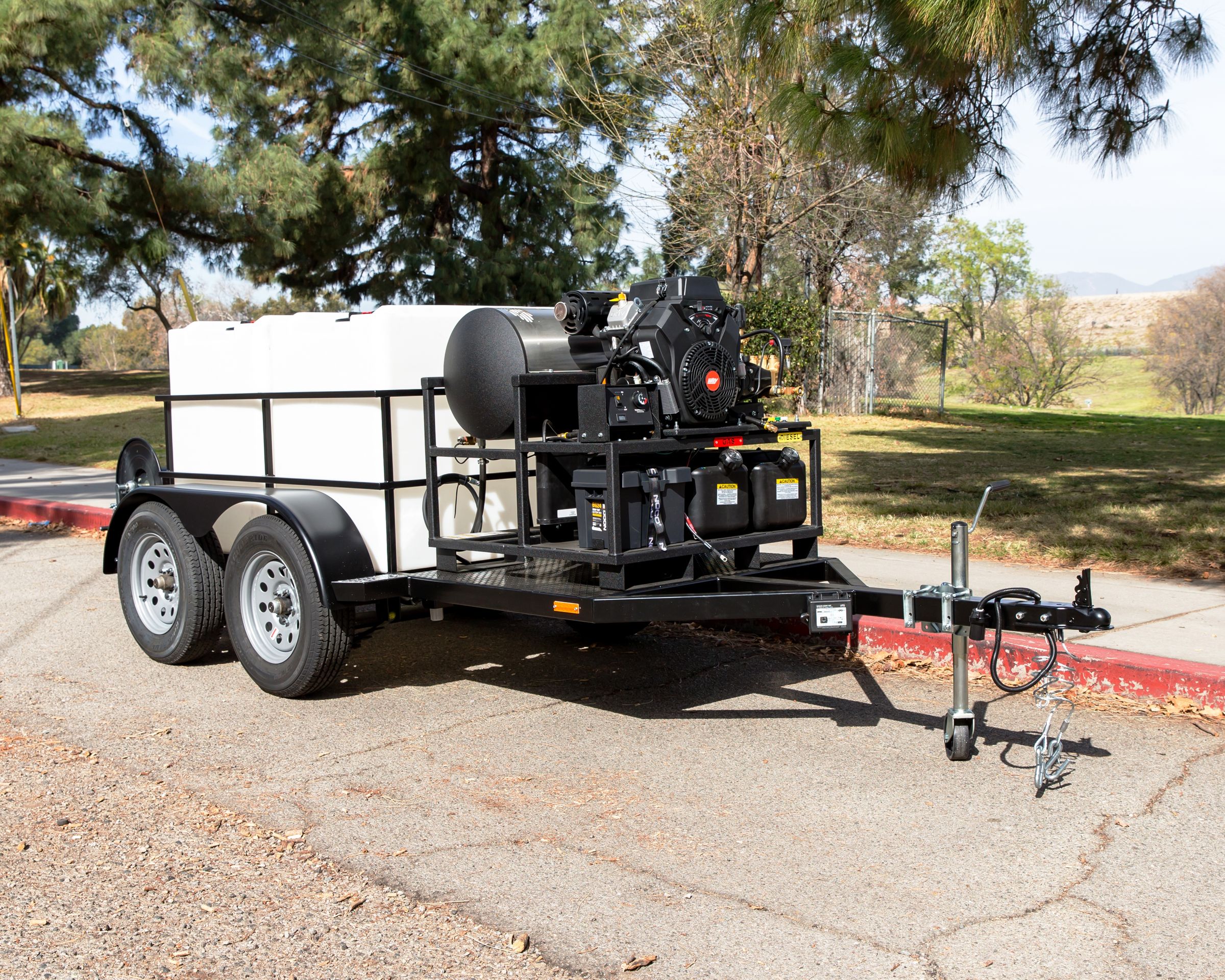
AWW-HDS8 on the UTT460 tandem axle, photographed by Universal Trailer

AWW-HDS8 · UTT460

GPM / PSI
8 GPM
Engine
25 HP Kärcher V-twin, gas and diesel tanks
Tank
460 gal, Tandem 3,500 lb drop axles
From $18,088Published price, Oct 23, 2026
Build this rig

From the build gallery

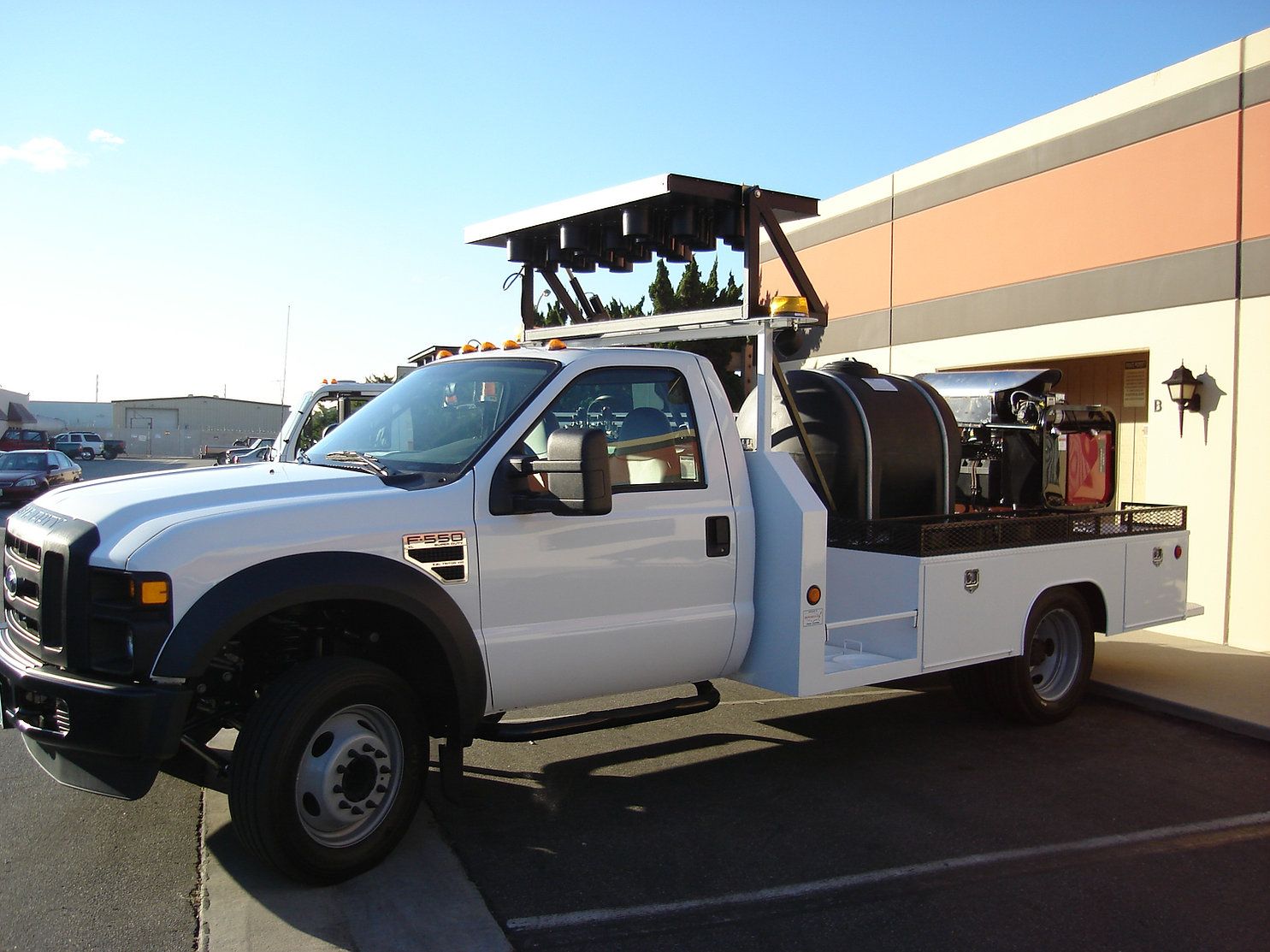
In the gallery: the Roadline GPMT-H/W truck, a white service-body pickup carrying its own tank, a hot water machine and an arrow board.

Roadline graffiti-removal truck, model GPMT-H/W: a white service-body pickup with a tank, hot-water machine and arrow board

Tell us what's going wrong

Graffiti back by Monday and a crew working with the wrong rig

A dead burner, a citation, a bid due Friday. Your words.
How do we reach you? A phone or an email is enough.
A few more questions (optional)
Downtime, labor, a lost bid. A rough idea is fine.
Brand, model, age if you know it.

Here's what happens next: The Pacoima counter calls you within one business hour. The call is 15 minutes. We ask what's going wrong, how you plan to pay, and who else weighs in. At the end we set a next step, or tell you straight that we're not the right shop. Nobody pitches anything until we understand the job.

Rather just talk? Leave a number.
A dead burner, a citation, a bid due Friday. Your words.
How do we reach you? A phone or an email is enough.

Here's what happens next: The Pacoima counter calls you within one business hour. The call is 15 minutes. We ask what's going wrong, how you plan to pay, and who else weighs in. At the end we set a next step, or tell you straight that we're not the right shop. Nobody pitches anything until we understand the job.